
Planting Zinnias for Fall Color
'Happy Flowers'
Virginia Burkett
6/20/20262 min read
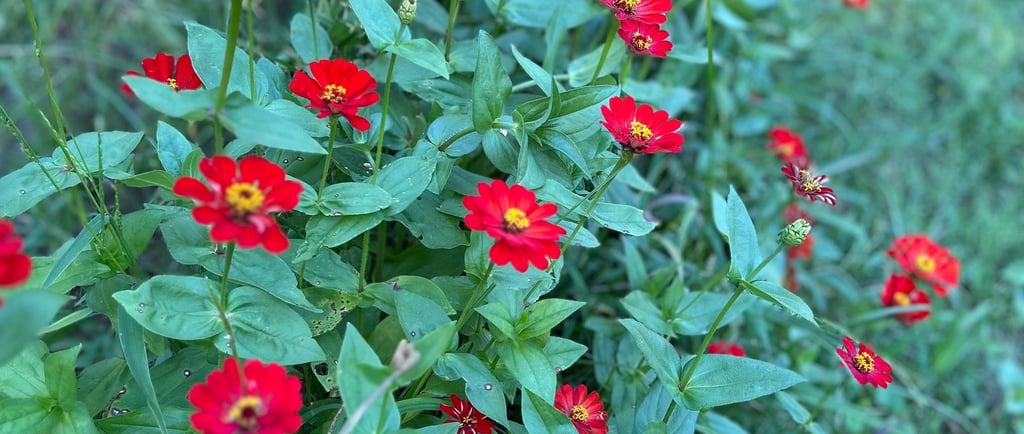
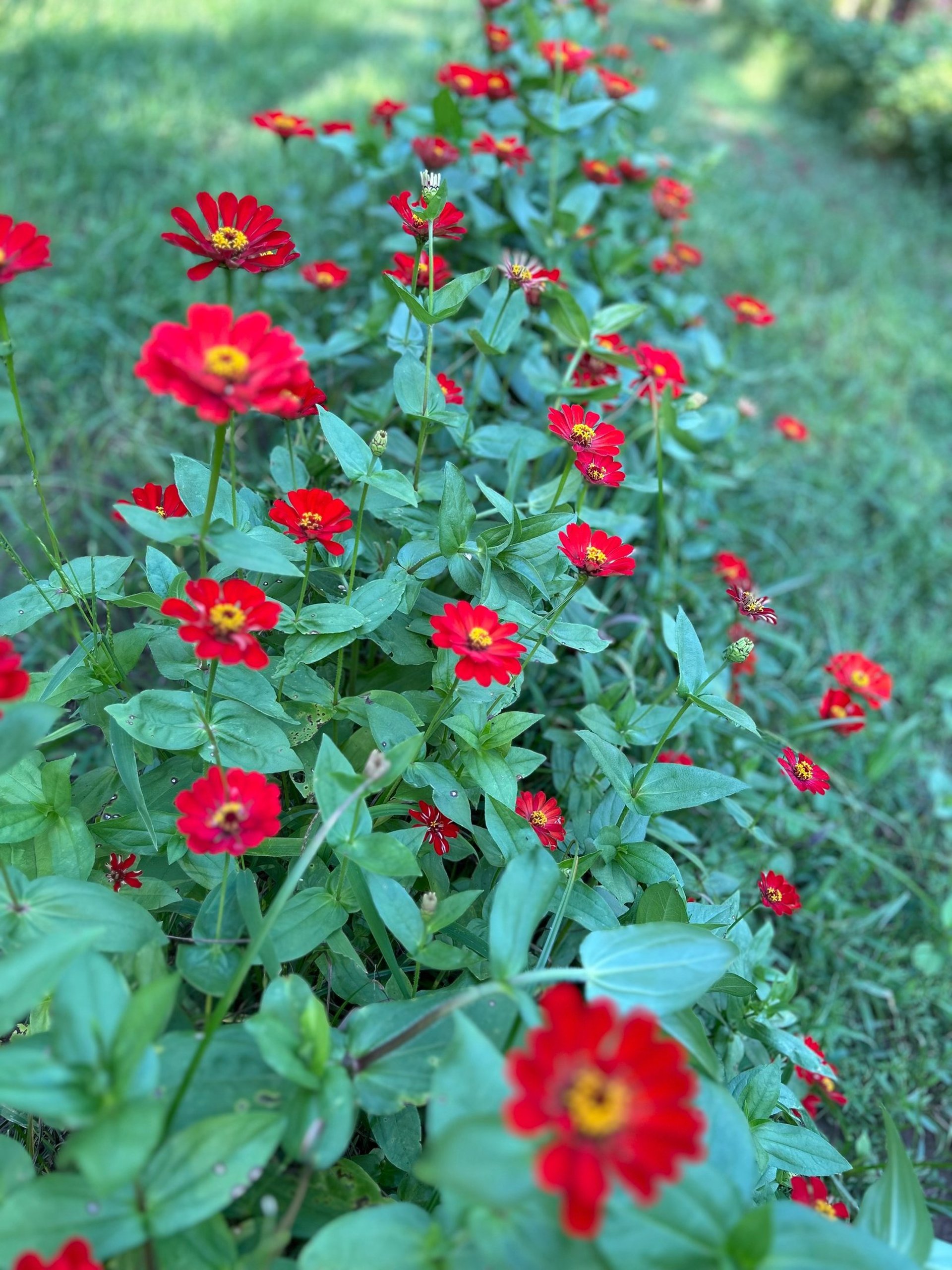
Zinnias are called “happy flowers” for good reason. Their lush colors and cheery faces brighten any garden, any room. They are known for their endurance as cut flowers and for their prolific blooming in the heat of the summer.
My husband tills roughly a quarter acre of well-drained soil every spring and we sow our zinnia seeds in April. We purchase from “bulk seed” companies on line and sow them densely in shallow furrows (1/2”) that we make with the edge of a hoe. We gently cover and tamp the seeds, which germinate within a week and grow quickly in full sun with warm weather and spring rains. Although zinnias are relatively drought tolerant, they will succumb to prolonged drought coupled with intense heat. We lost all of our zinnias during the especially dry spring of 2022. Every year flower production tapers off in late July and August. We may have a few blooms in August, but without irrigation and frequent deadheading (removing spent blooms), the 4 to 6 foot tall plants start to die back in July. We bush hog between rows a couple of times during the growing season to eliminate weeds.
During a visit to Fredericksburg one October, we were amazed to see a field of healthy zinnias in full color. The owner of the field told us that he sowed those seeds in July because he had lost all of his flowers during a severe dry spell. We decided to try a second sowing last July after our first crop had started to decline. We tilled a new garden in an area with access to irrigation. We side dressed each row with 13-13-13 fertilizer and watered if they start to wilt. We had beautiful cut flowers through October. The LSU Ag Center says that zinnias can be planted as late as August 15 and enjoyed until the first frost.
We share flowers with family and friends. They have been used for birthday parties, church services, baby showers and funerals. The past couple of years we have invited many people to come and cut fresh flowers. Cutting zinnias promotes flowering. If you prefer to leave your flowers on the plant, you can either remove the dead flowers, which encourages new growth, or allow the flowers to turn brown and crunchy on the stem if you want to collect seed. Seed is easy to collect once the flowers are thoroughly dry. I put the spent flowers in a paper bag or on newsprint and leave them in a warm, dry place before I separate the seed from the cone-shaped flower head.
Regarding irrigation, the LSU Ag Center advises the use of a soaker hose, drip tape, or other means of watering at the base of the plants. Watering at the base of the plants prevents the spread of disease, such as zinnia leaf spot. Zinnia leaf spot starts at the base of the plant and works its way up the leaves eventually killing off the plants. Leaf spot blight is caused by fungal disease and can be managed with fungicide sprays, such as mancozeb or a copper fungicide, following rainy periods.
There’s a plethora of zinnia seed varieties available online but we’ve have plenty of success with seed from our local farm and garden center. My favorite zinnia varieties are Meteor and Scarlet Flame (reds), Salmon Queen, Lilliput Mix (miniature), Orange King and California Giants.